WallScanner XR
A mixed-reality prototype that turns individual detector readings into a visual map of a wall. Measurements stay where they were taken, visible through a Meta Quest headset.
- TYPE
- Independent prototype
- HEADSET
- Meta Quest 3
- MY ROLE
- Hardware, computer vision and XR app
- Tags
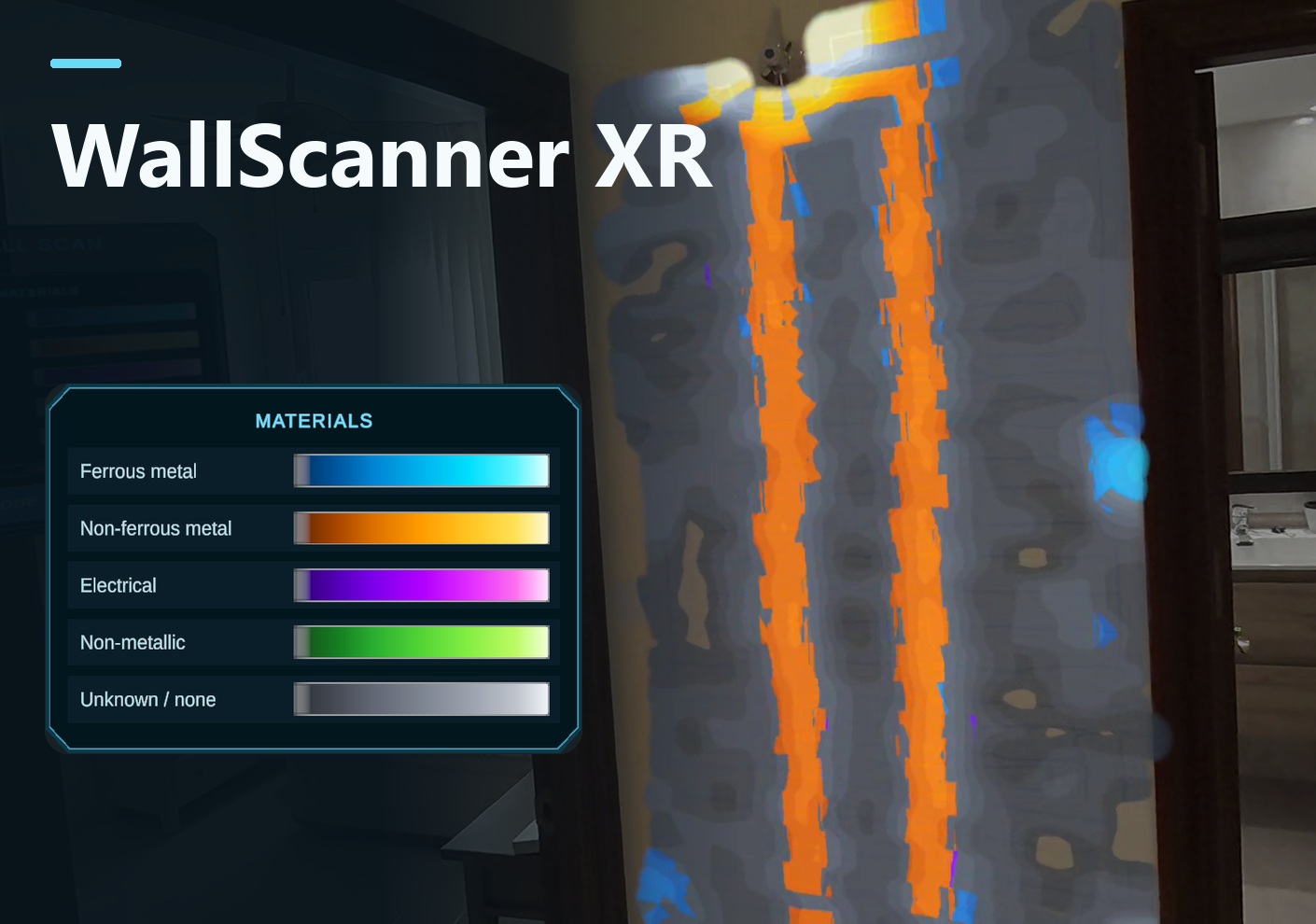
A handheld detector only knows where it is right now.
Understanding a larger area means scanning the same places again, marking the wall or remembering where earlier signals appeared. WallScanner XR keeps every reading attached to the surface, so you can step back and inspect the accumulated pattern on the wall itself.
How it works
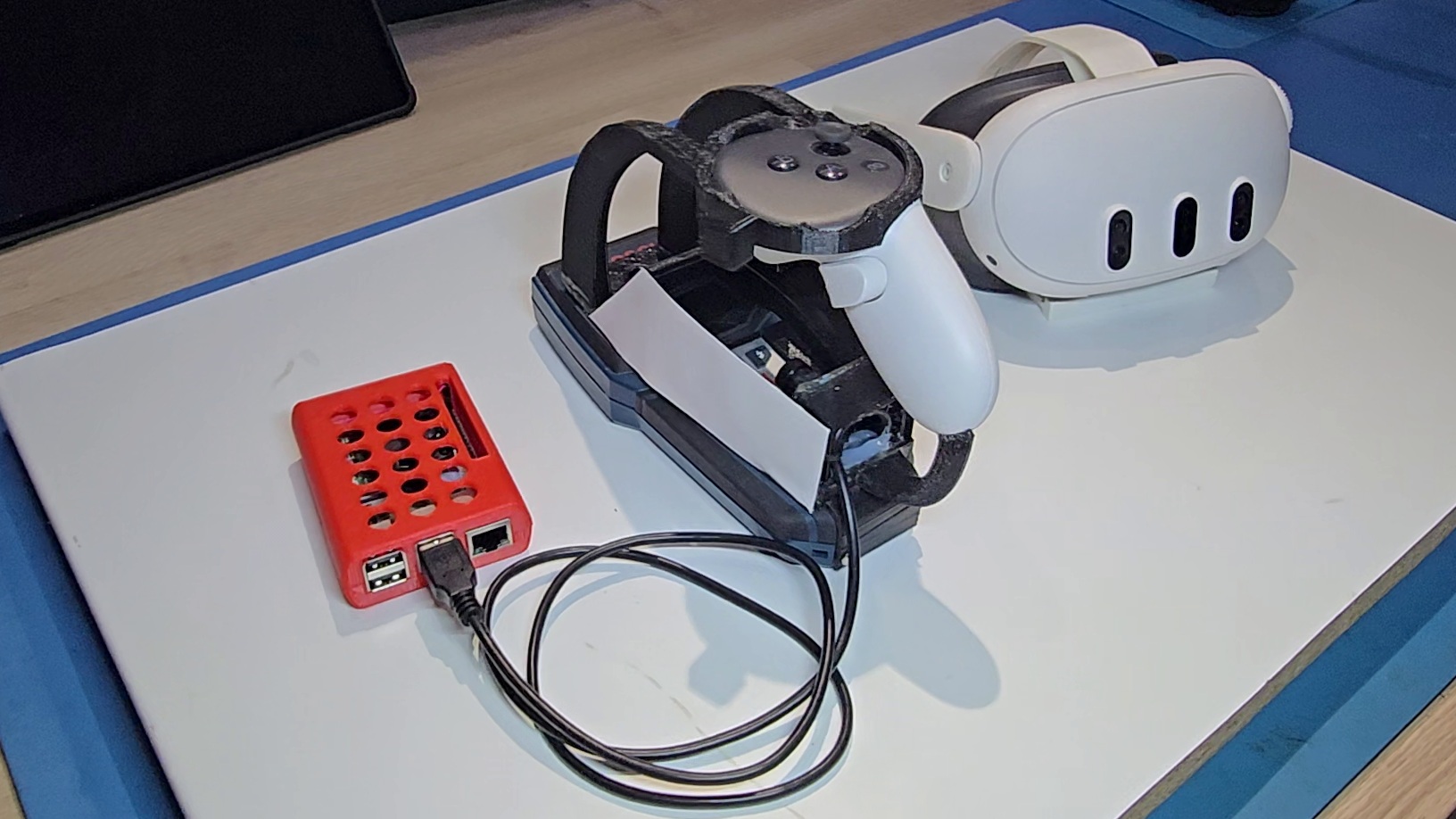
- Read the instrument. A camera captures the detector’s LCD. Python and OpenCV extract signal level and material, with no electronic connection.
- Track the position. A Quest controller mounted on the scanner gives its pose. A calibrated offset maps it to the sensing point.
- Build the map. A Raspberry Pi streams readings over UDP. Unity updates a wall-aligned heatmap in mixed reality.
What I built
- Camera-based display analysis that turns the detector’s visual output into streamed sensor data.
- Spatial registration linking each reading to the scanner’s position and orientation.
- GPU heatmaps with spatial interpolation and signal-strength or material colour schemes.
- In-world controls for signal level, connection state, recording and visualisation.
- Scan-session storage with persistent spatial anchors through OpenXR.
Results
—[PENDING: measured result]
—[PENDING: measured result]
—[PENDING: measured result]
Notes and limitations
What it is: a spatial record of the detector's readings, interpolated across the surface. What it is not: a reconstruction of what is inside the wall. Accuracy depends on three inputs: the detector, the controller-to-sensor calibration and XR tracking. It has not been quantitatively validated yet.